Microglia: synaptic pruning
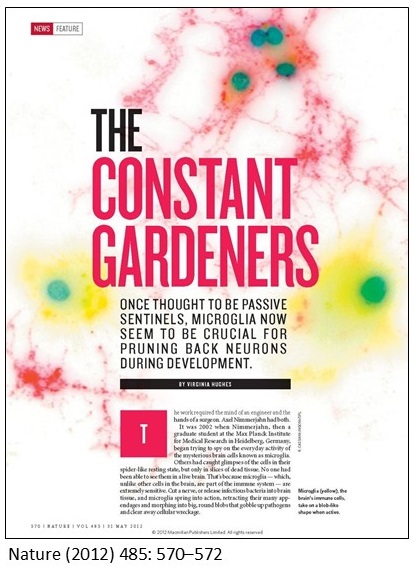
- Once thought to be passive sentinels, microglia now seem to be crucial for pruning back neurons during development
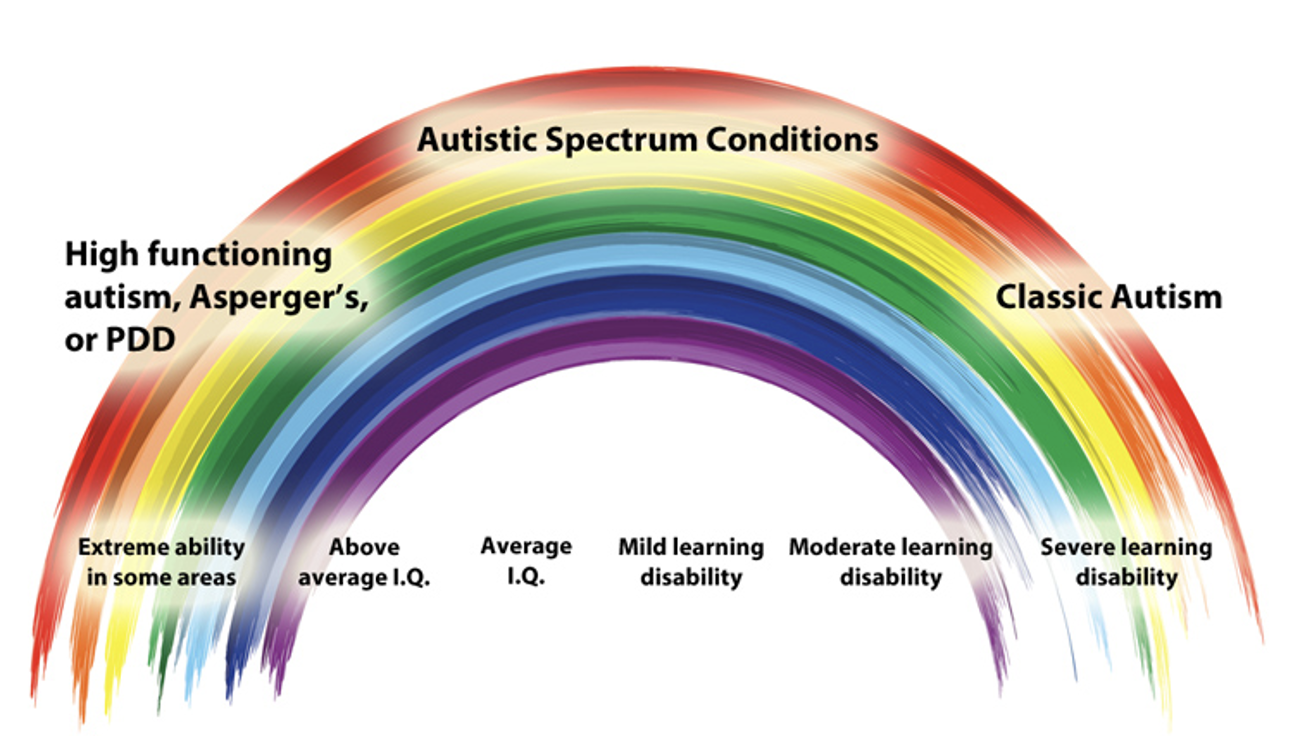
- Neurodevelopmental disorders such as autism and schizophrenia are often associated with faulty pruning
- Mouse models of Obsessive Compulsive Disorder and Rett Syndrome, an autism spectrum disorder, show marked improvements after their microglia are replaced
Microglia: synaptic pruning
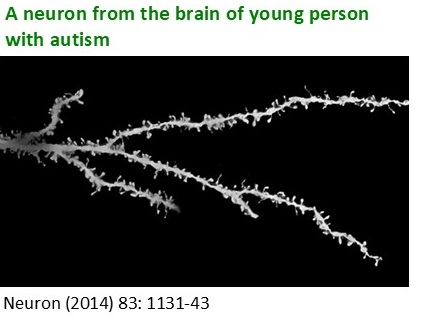
New study finds that young people with autism have excess synapses in the brain. This excess is due to a slowdown in a normal brain “pruning” process during development. Synapses are the points where neurons connect and communicate with each other, and an excessive number of synapses may have profound effects on how the brain functions. A drug that restores normal synaptic pruning has been shown to improve autistic-like behaviors in mice, providing proof of concept.
Neuron (2014) 83: 1131–43